

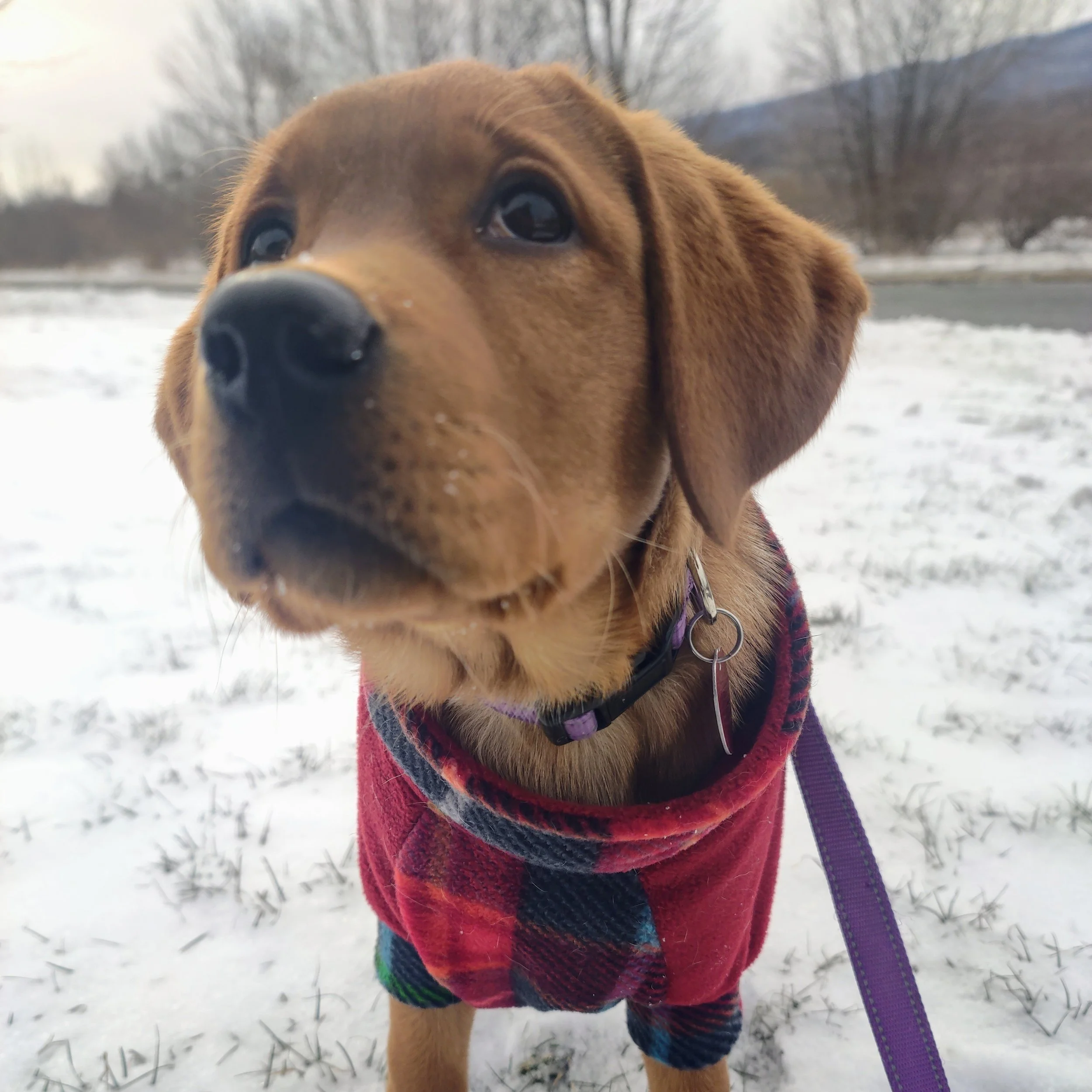
Winter is coming quickly, bringing frost and fun - but also some worries for our furry friends! Just like summer, there are quite a few dangers for dogs in winter. In this post, we’ll discuss how the cold affects dogs, some gear that can help protect them, and how to get your dog to wear it!
Winter Coats + Your Dog
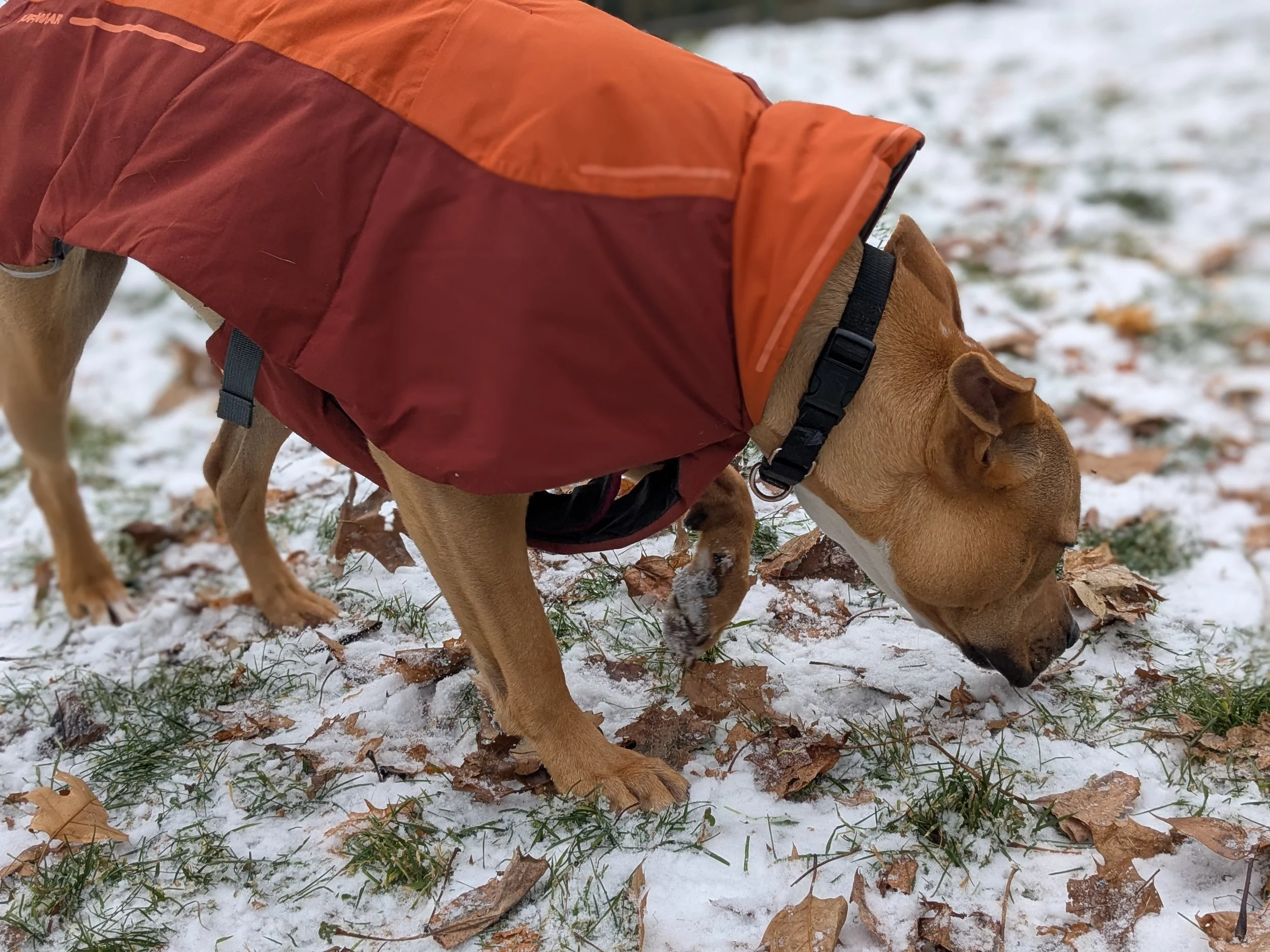
A coat keeps Hestia comfy in the chill, but still able to move around freely and sniff!
Winter has some dangers for dogs. Like humans, they generally aren’t cold-resistant. While heavy-coated and double-coated northern breeds like Huskies are well-adapted to this weather, the average dog is not. Even long-haired breeds need protection from the elements!
In particular, small dogs and those with thinner coats, like Hestia here, are particularly susceptible to the cold. Additionally, other factors like age and health are important to consider when sending your pup outside during the winter months. Senior dogs and puppies tend to need more protection from the elements.
Coats, of course, provide an extra layer of protection that can help dogs be more comfortable in the wind and chill. Here are some types:
-
A simple light coat or jacket can help your dog enjoy the outdoors without catching a chill!
-
Like for us, insulated jackets provide the most warmth for animals! These heavier coats can make dogs cozy in very cold weather, especially if they plan for being outside for longer stretches
-
You can dress up your dog, too, in rainy wear! No more shaking droplets everywhere with coverage for stormy days.
-
Fleece sweaters and jackets tend to lack the waterproofing and harder exterior that is necessary for outdoor elemental protection, but plenty of dogs love to be cozy inside too!
Dog Paws + Winter Boots
Another concern during the cold months: dog paws. Exposure to antifreeze, salt, ice melt, and the like can be harmful to pups. These substances can stick to your dog’s paws or coat, and become a danger - dogs will naturally groom themselves, leading to accidental ingestion. Make sure to wipe down paws after a walk, so your dog doesn’t accidentally lick up dangerous substances.
Ice melt usually causes effects like vomiting, diarrhea, and stomach upset. In severe cases, these symptoms can cause dehydration. But ingesting large amounts of ice melt can lead to excess sodium, which can even cause tremors and seizures. Even “pet safe” ice melt often contains materials that might cause stomach upset, so keep an eye out - especially if your pup gets a hankering for this substance!
Beyond looking adorable, winter boots can help protect your dog from salt and the chemicals used in ice melt, and even help with traction on slippery surfaces.
Helping Your Dog Adapt to Clothing
A few tips and tricks:
Have more than one coat on hand. Wet coats will make your dog colder in bad weather!
Make sure the fit is good, for boots especially. Dogs tend to be wary of boots at first, so making sure their discomfort is not due to pain is important. Too tight clothes are uncomfortable and restrict movement.
Consider a sweater - some dogs love to be toasty warm inside too!
Acclimating your pup to their new clothing may take some time. Focus on slowly building up comfort levels. Unlike humans, dogs don’t naturally wear clothes. This experience is more like a human wearing formalwear – slightly uncomfortable at first.
In general, take a slow and steady approach. Allow your pup time to become comfortable with their new clothing. You can always use toys and treats to make the experience more appealing to them. And be sure to praise them for wearing their new clothes - making this experience positive is a game-changer.
Of course, it’s quite possible your dog won’t love their new fit – some people hate heels and suits, after all. But with some patience and trial and error, you can find the gear that will keep them cozy and safe all winter long.
Training Your Dog to Wear a Winter Coat
Step 1. Start by just letting them see and smell the coat first, before letting them put it on. Treat and/or praise any interaction with the coat.
Step 2. Approach your pup with the coat, but don’t put it on. Treat and/or praise.
Step 3. Start by putting the coat over your dog’s head – or one paw for step-in sweaters – treat/praise, then remove it. Once your pup tolerates this much without fear or fuss, move on to step 4.
Step 4. Repeat step 3 and fasten the coat, treat/praise. Remove the coat. For coats with multiple fasteners, repeat this step for each one until your pup is fully wearing their new coat.
Step 5. Put the coat on your dog and have them wear it for a few minutes at a time, treat/praise every time you put it on. Increase the time your dog wears the coat by intervals of a few minutes until your pup is comfortable.
Training You Dog to Wear Winter Boots
Step 1. Start off by just letting them see and smell the boots first, before letting them put it on. Treat and/or praise any interaction with the boots.
Step 2. Approach your pup with the item, but don’t put it on. Treat and/or praise.
Step 3. Put one boot on briefly, treat/praise, then take the clothes off again. Once your pup tolerates this much without fear or fuss, repeat the process for all paws, working one at a time.
Step 4. Now that your pup can handle their new boots on each paw, try putting on two boots at a time. If that goes well, try three, then all four. Treat/praise and remove the boots.
Step 5. Put the boots on your dog and have them wear them for a few minutes at a time, treat/praise every time you put them on. Increase the time your dog wears the boots by intervals of a few minutes until your pup is comfortable.
Dogs may feel worried about their movement being restricted in clothes – after all, running away is often their first line of defense. Once they’re wearing their new gear, try playing with them, either inside or outside. Throwing toys or treats will encourage them to move, and realize they are able to move freely. This will make a huge difference in their comfort with clothing.
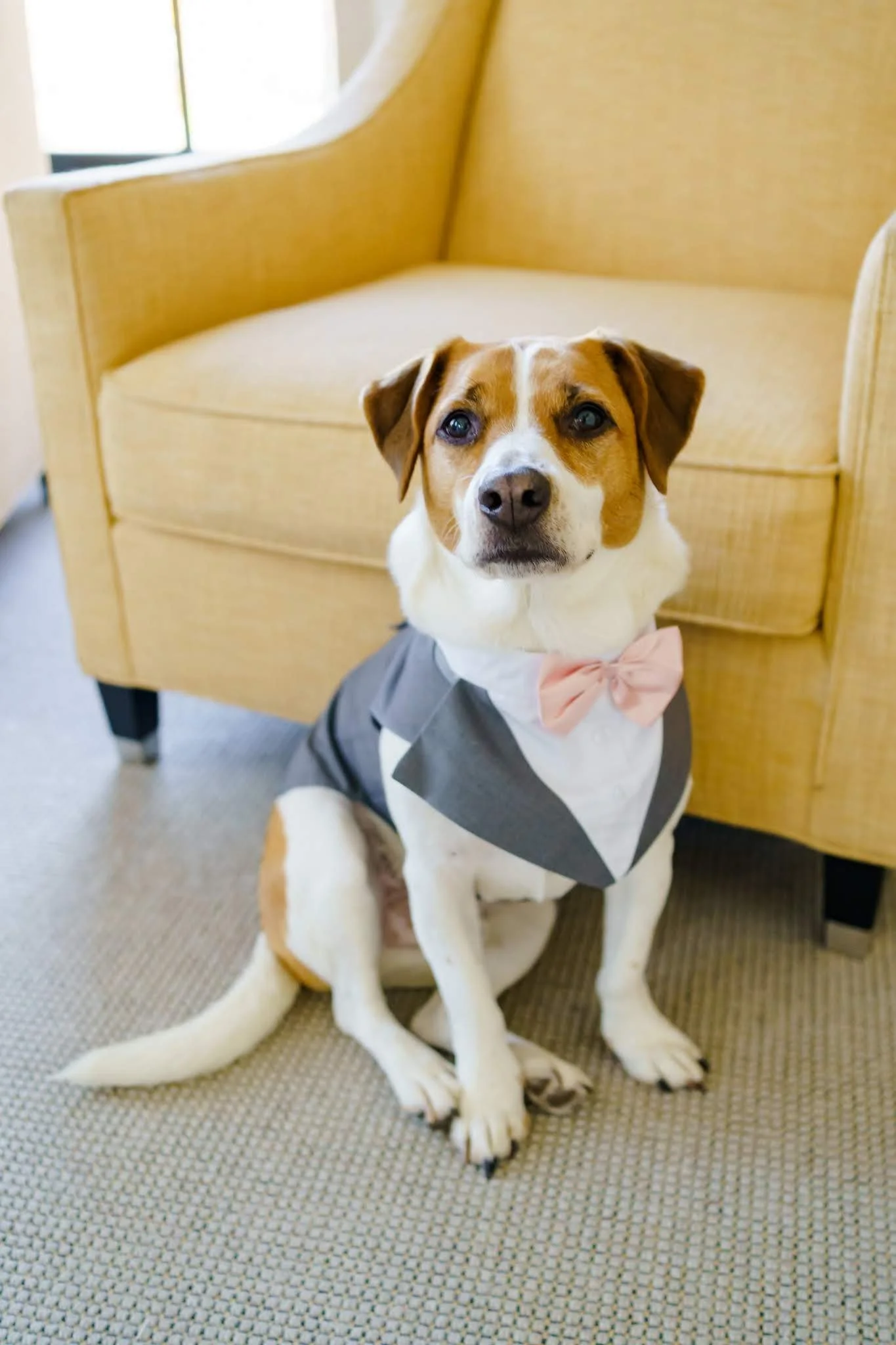
These same tactics can be used for costumes or any other wearables you may have for your pup. Just remember, slowly adapting your dog to a cute costume will lead to adorable results.
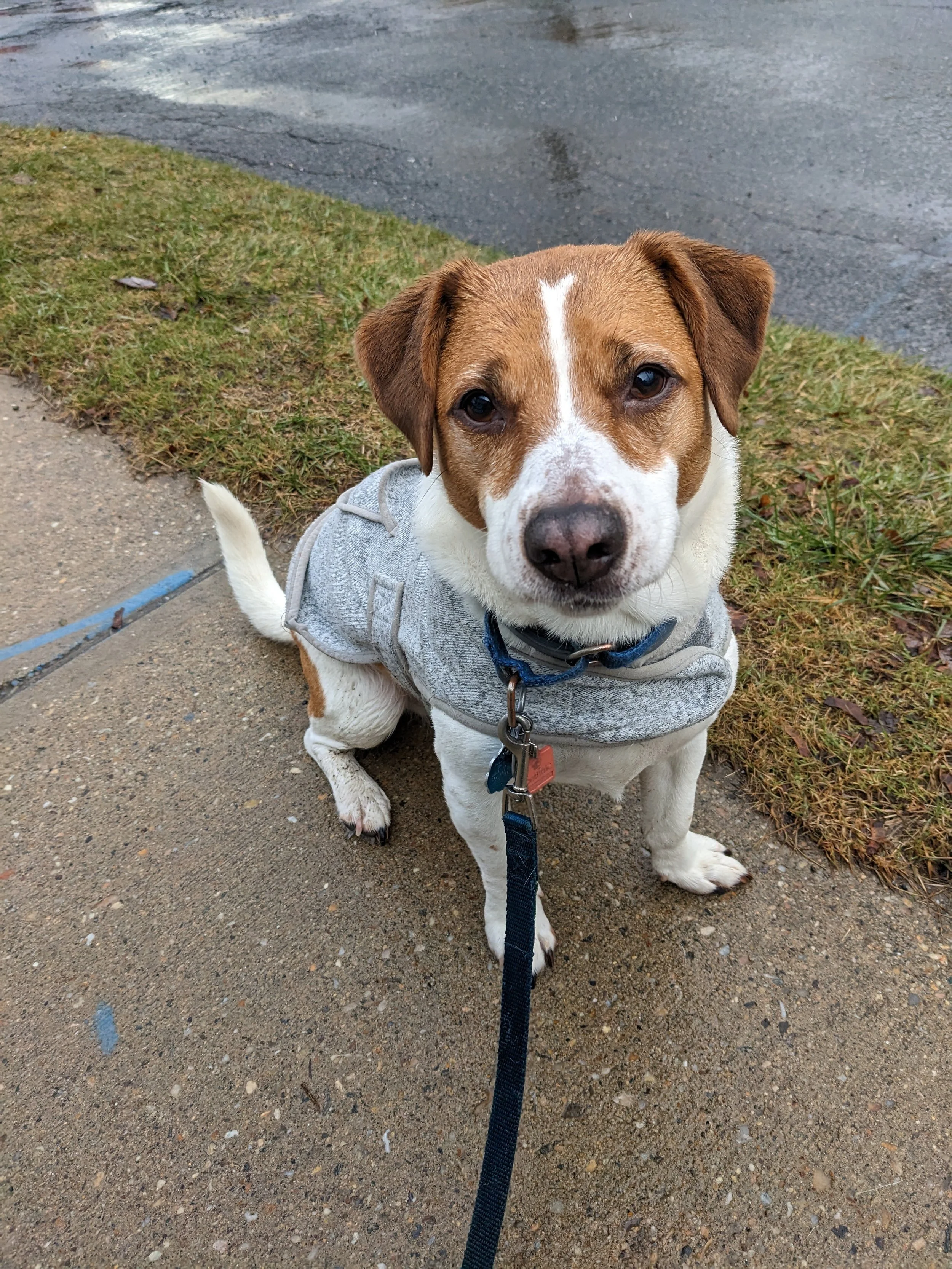
Charlie’s sweater keeps him cozy in rainy weather.
