
What’s in a Tail? The Meaning of Tail Wags!
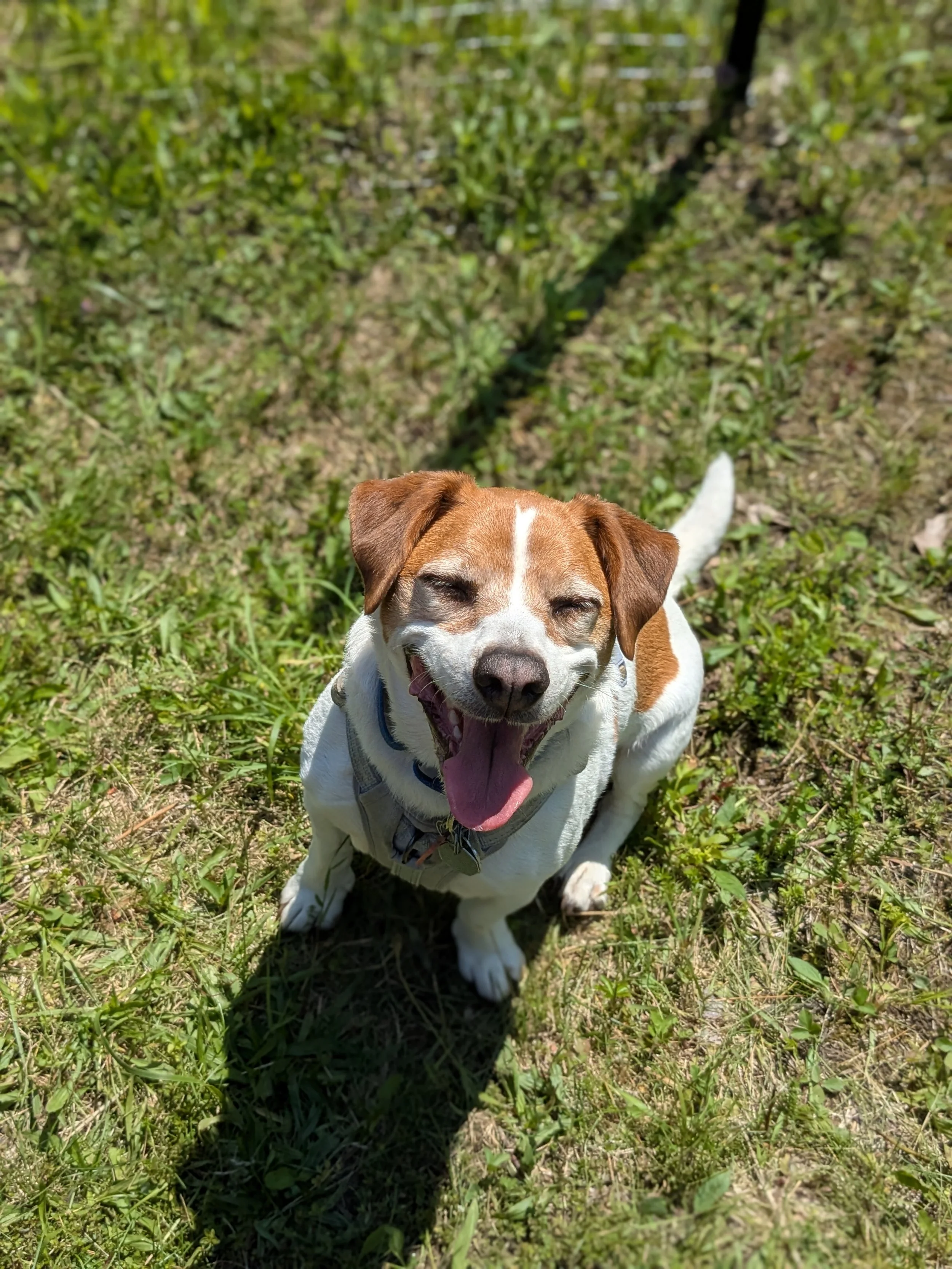
Check out this smile! But if you want to understand your dog more, reading the signals from their tail is important!
When your dog wags its tail, it’s saying more than just “Hello!”. A tail wag can express a huge variety of emotions – from happiness to stress. When it comes to dog body language, don’t be fooled: they are expressing lots of emotions, which we can decipher through understanding what different tail wags mean! Dogs are able to communicate through a variety of manners - but similar to how barking is not always bad, tail-wagging is not always positive. Let’s learn about why dogs wag their tails, and what it means.
Tail Wagging: Fast Facts
We know that dogs wag their tails at exciting friends and to express happiness, but did you know they wag their tails at other dogs, humans, and even objects? Dogs have tails to facilitate communication!
Because dogs can’t speak, they rely on body language to communicate.
Tail wagging can express many emotions: excitement and happiness, curiosity and interest, or stress, fear, and frustration. Because of the variety of emotions, it’s important to be aware of other factors besides whether the tail is wagging or not.
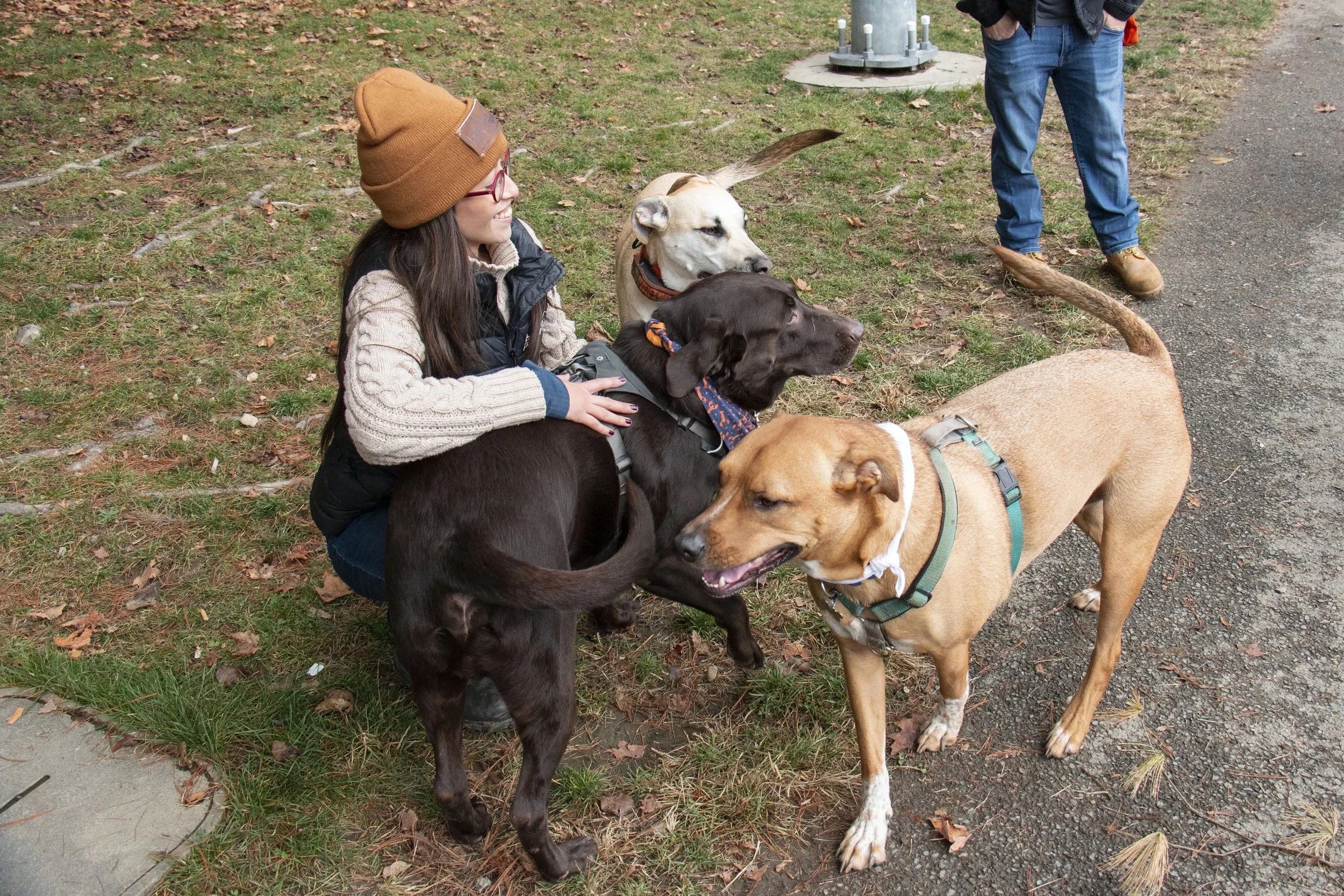
The dogs surrounding our trainer, Tiff, have tails raised and swooshing back and forth - read on to know what this means!
How to Understand Tail Wagging
First off is speed. The more a dog wags its tail, the more aroused it is - basically, the more emotions they are feeling. This can be good or bad, since they can become excited by a family member coming home or anxious about a person entering the house. In general, however, more arousal can be a negative, since it puts your dog on ‘alert’ or simply rambunctious.
Another factor is height. A higher tail generally means the dog is more confident, but potentially aggressive. Think of a situation like seeing a stranger enter the house, or encountering another dog walking by their lawn. A lower tail means a dog is less confident and more anxious. We all know ‘tail tucked between the legs’ symbolizes submission and fear - but it doesn’t have to be extremely low to mean a dog is feeling uncomfortable. If tails are at a neutral or higher position, dogs are often more comfortable - just checking out the situation.
If a dog is neutral about a situation, or tentative, their tail may be at a neutral or low position, wagging slowly. A fast, high wag may symbolize stress and tension, a dog on alert. A tail swooshing side to side at a consistent pace, combined with a puppy jumping up and down? They love you.

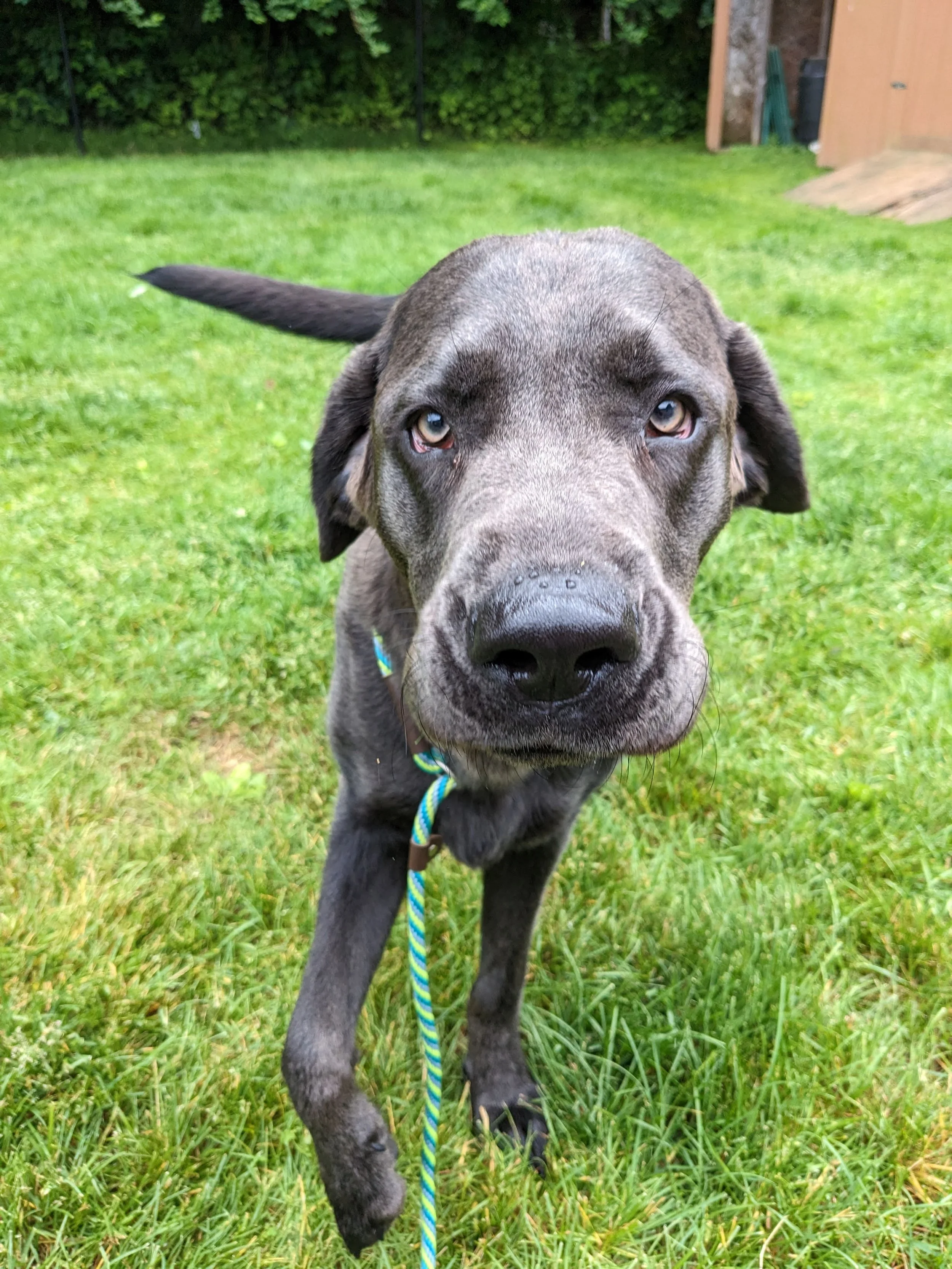
Ford’s tail is relaxed - he isn’t particularly aroused.
Of course, as that last sentence hinted at, it’s never just the tail. Tail, eyes, posture, behavior? They all add together to make up what we call “dog body language”.
Since body language is the way dogs communicate with us, by absorbing these details, you can get closer to communicating with your pup! (But no, they probably will not learn to speak).